

Explainer: What is "Teacher Tired?"
Why Teachers Are So Exhausted in May — and Why Summer Doesn’t Feel Like a Break

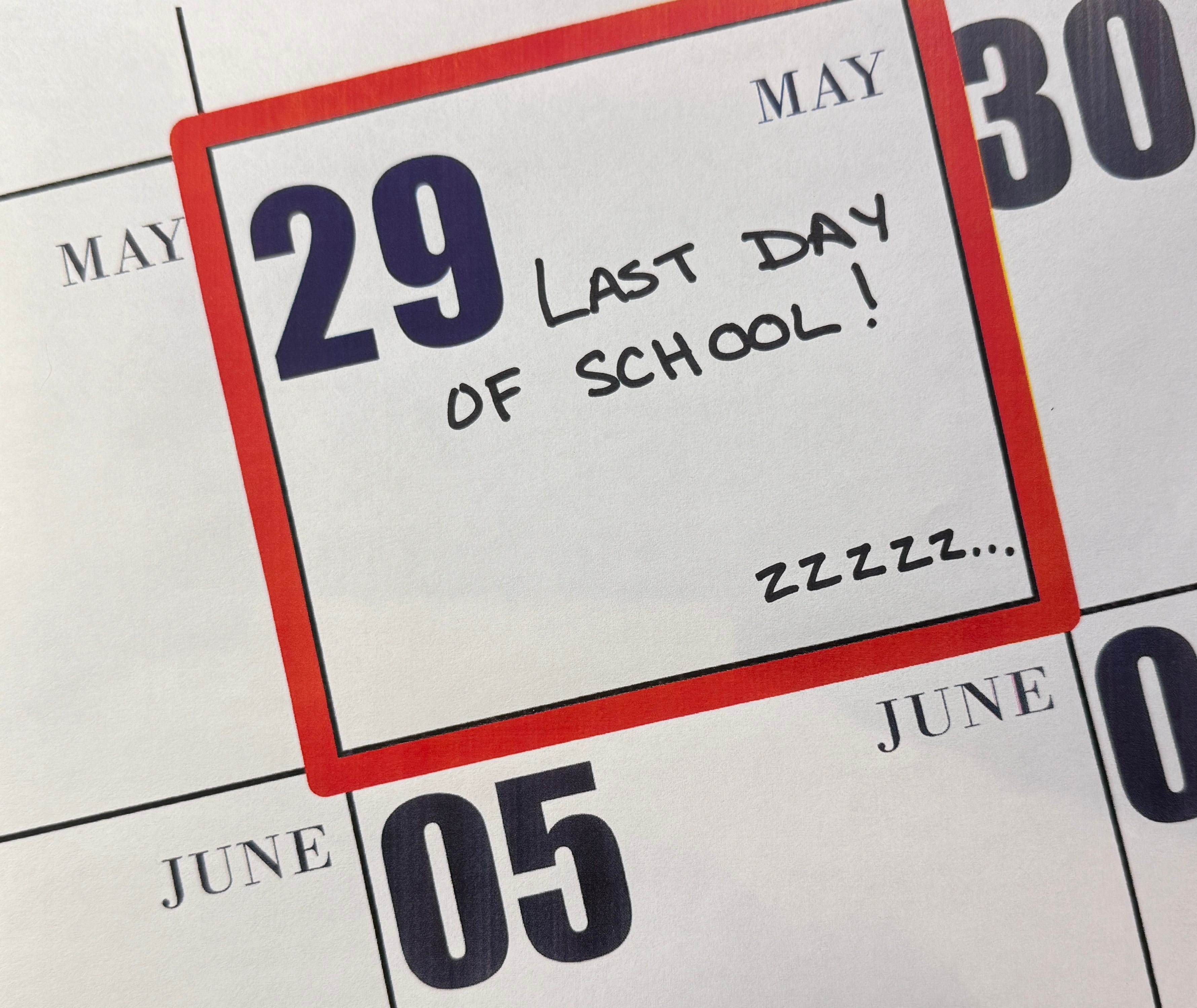
I haven’t been here in a little while because, honestly, I’ve been living the subject of this article.
If you’re a teacher or if you live with one, you already know what May looks like. This month ranks right up there with October and February as one of the worst months of the year. Maybe the worst.
From the outside, this looks backward. The school year is ending. Summer is visible on the horizon. Shouldn’t teachers be excited? But by May, many teachers are too exhausted to even perform excitement correctly. It’s frustrating because we can feel its wrongness, its backwardness. And often, trying to explain it to a partner who’s not a teacher, or friends who aren’t in the job, why you’d rather go home and go to bed at 7:00 pm on the last day of school instead of partying is tough.
I’m pretty sure there are t-shirts: “Ain’t no tired like teacher tired.”
And before we get into this, none of this is to say that teachers are more tired, or that teaching is unique in running those who do the job far into the red. This is just about teachers. And of course, if you are a teacher, your mileage may vary. This isn’t a competition over who works hardest. It’s simply an explanation of a phenomenon many teachers recognize immediately.
Let’s explain this while my brain still has enough RAM left to open another tab.
We All Look Tired in the Same Way
By mid to late May, schools start moving in different ways (FYI—your timing may vary depending on your district calendar). Halls get quieter; teachers rush to grade material; the testing schedule supersedes the regular schedule; patterns get disrupted; and teachers rush to grade final materials.
It’s kind of what you’d expect.
But when you specifically look at the teachers, there’s something more. We start moving differently. Slower. Quieter. Like every task suddenly weighs a little more than it should. There’s the faraway stare. We just… sit quietly during planning. Conversations with others trail off into…what were we talking about again? Forgetting why you walked into a room. Forgetting to go to meetings. Walking papers to the front office feels like walking down an infinite hallway.
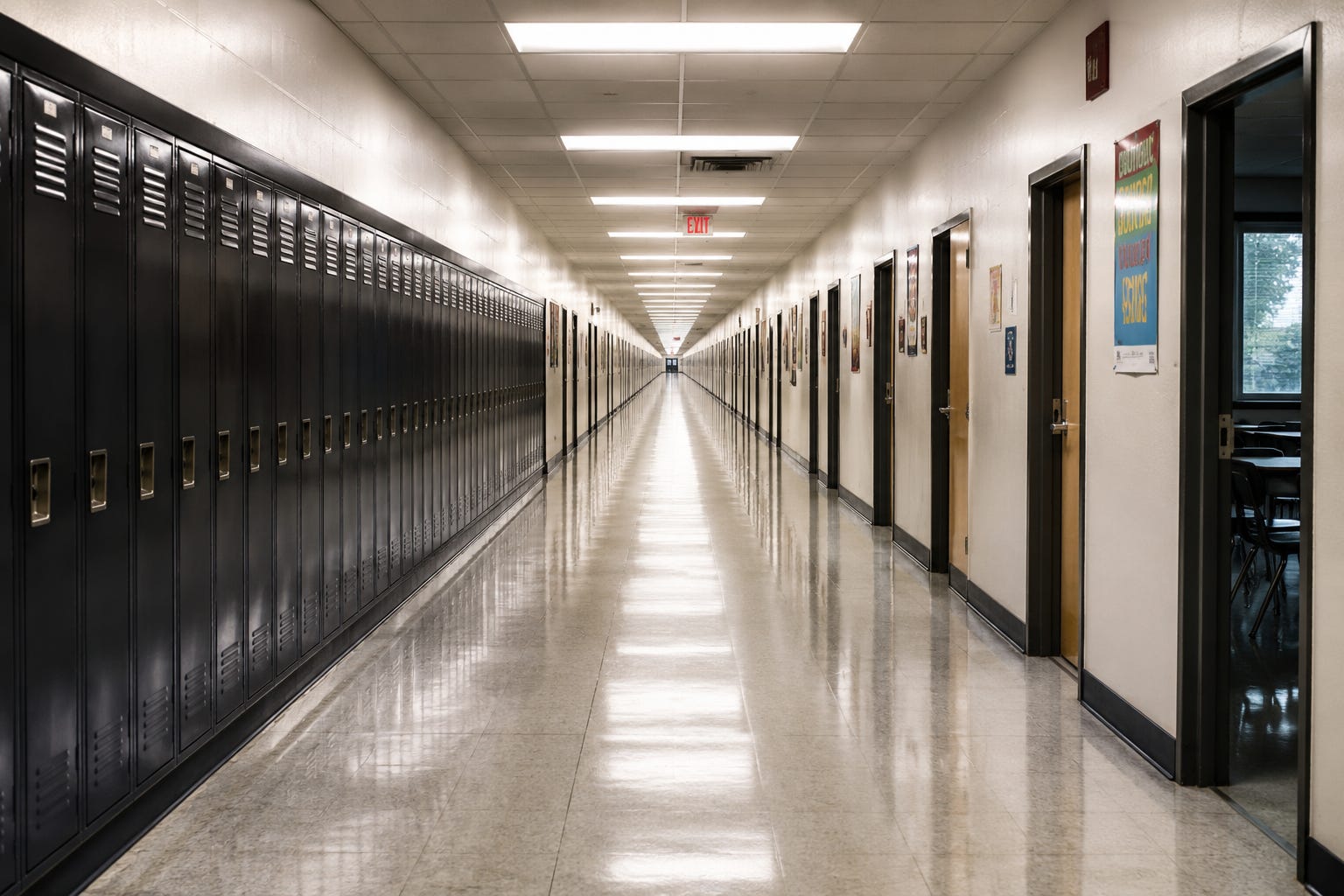
The exhaustion is inverted.
Starting things is exponentially harder. Everything falls into the bucket of “I’ll get to it tomorrow.” The work is decreasing linearly, but the effort required to do the work is increasing. Every task has a startup cost.
You go to work—usually a few minutes later than you did in the height of the year—and leave a few minutes earlier, but you’re exhausted. Even—especially—on the days when your primary responsibility is sitting silently in a room while thirty students take a math End-of-Course exam.
On the personal side, right now I’ve got a list of twelve things I need to do to close down my room for the year. Just twelve things. Back in March, I would have knocked those out in an afternoon. Now? I have to hype myself up like I’m climbing Everest. You can do this. And every time I actually finish one of the tasks, I’m almost annoyed by how easy it was in retrospect. The hard part isn’t the task itself. It’s the getting started.
It’s strange the first time it happens to you. By your fifth or tenth May, you realize it’s practically seasonal.
This Isn’t Laziness
It’s easy to look at teachers in May and misread what you’re seeing. Honestly, we misread this too, and sometimes feel deep guilt because we can’t perform at the same level we’ve been performing at all year.
This specific May exhaustion is not simple disengagement or apathy. This isn’t teachers checking out. It’s not coasting, countdown behavior, or teachers already mentally checked out for summer with flip-flops on and margaritas in hand.
We’re not disengaging. We’re still here. The end of the year finally puts a period at the end of the sentence. Our systems are finally dealing with the year’s accumulated exhaustion.
The urgency of the school year fades away before the exhaustion does.
Teachers have been running at full tilt for ten months. Every day is vigilance and doing emotional work and regulation, in addition to the normal demands of the job: supervision, cognitive switching, parent emails, grading, planning, hallway duty, dealing with constant low-grade interruptions, lesson pivots, decision fatigue, and maintaining emotional steadiness for students even when you don’t particularly feel steady yourself.
And teaching rarely allows closure.
Tomorrow starts before today ends.
Just This Year…
For me personally, this year was a bit of a banger. Unfortunately, not an especially unusual one.
I was going into the school year, still working through my Dad’s passing three months earlier. Our district had huge budget problems that were hanging over us like the sword of Damocles.
Within the first month of school, we had a student commit suicide, and there were mass district-wide layoffs with uncertainty about future cuts in the coming months. Like many other regions of the country, rumors and sightings of ICE agents sent waves of fear through students. Our district leadership was tone-deaf in their communication, as they seemed to reach a new level of disconnection from the day-to-day business of the district’s schools.
We had two weeks of snow days in January-February. Measles were for sure coming to ravage our school. A teacher was removed from the school under police escort, and we were told not to talk to our students (who had questions and were very upset) about it. Attendance started spotty and grew spottier still.
And by April, the start-of-year community goodwill had evaporated. When a large number of teachers traveled to our state capitol on May 1st, prompting the district to close schools for the day, there was no shortage of barbs and outright hate aimed at teachers on social media and from community members, along with rumors of state or district retribution for those who rallied.
Somewhere in there, I attended and presented at the National Science Teaching Association national conference and was out for four days. It was an amazing four days of learning, networking, and doing what I am supposed to be doing as a science teacher—developing my skills and understanding. And I still feel guilty because I was away from my class for four days.
Oh, and I had jury duty too. When the D.A. said the case would last a week…full-blown anxiety attack. I couldn’t be away from my students for that long. Not after snow days and my conference. Had to stand up in open court and explain why I needed a deferral as a teacher, and my kids needed me. I still have nightmares about having to do that.
Throughout the year, we had the “business as usual” nonsense of pointless meetings, mandatory online training, instructional-time interruptions for schedule changes, weekly meetings about… data (I think?), more testing training sessions, occasional emergencies, reminders that we’re not doing enough, random security theater, and more.
One hour, you are helping students process grief and confusion. The next, you’re in a meeting about testing security, the ethics of standardized exams, and how your license will be forfeit if even the smallest screwup is caught.
And all of that was against a national backdrop that rarely felt calm, stable, or economically secure.
The frightening part is how normal this all started to feel. People ask you how you’re doing, and you just say, “Eh…I’m okay.”
And then I go home and watch The Pitt to decompress and relax.
Just Keep Teaching, Just Keep Teaching
So that happened. But as I’ve been getting at, processing time is a luxury.
My experiences this year aren’t special, nor are they by any means the worst a teacher has gone through. We’re people, we come into the job with baggage that we’re dealing with in our own lives. And the job goes on.
There’s no time to grieve, to recover, to reflect, to try and stabilize or metabolize stress because there’s always the next class, the next meeting, the next email, the next mandate, the next emergency, the next lesson.
Loops that get opened are rarely ever closed. For instance: the measles. As mentioned earlier, we were told in a meeting that it wasn’t a matter of if measles would show up in schools, but when. Warnings went out. Protocols were discussed. Anxiety entered the system. And then…nothing really happened. The outbreak fizzled, schools weren’t ravaged, and life moved on. But there was never a follow-up conversation saying, “Hey, looks like the threat has diminished. You can probably take that off your worry list.” The alert entered the nervous system; the resolution never really did.
And officially, we’ve never been given a reason why the teacher was escorted out by police, never to be seen again.
But that’s the larger pattern. Schools are designed to keep moving forward, even when the people inside them haven’t had time to emotionally catch up.
If you’re lucky, you’ll find a colleague who is a shoulder to lean on, a listening ear. Maybe a department that pulls together. Maybe just a moment of quiet to catch your breath.
Sometimes those moments are enough to carry you through the week.
The system assumes infinite emotional elasticity. There is no protected time for becoming human again. In the system, you are a teacher. You are a professional. You show up, you work. The expectation is simple: show up tomorrow and do it again.
In education, continuity is non-negotiable.
Accumulated Load = May Exhaustion
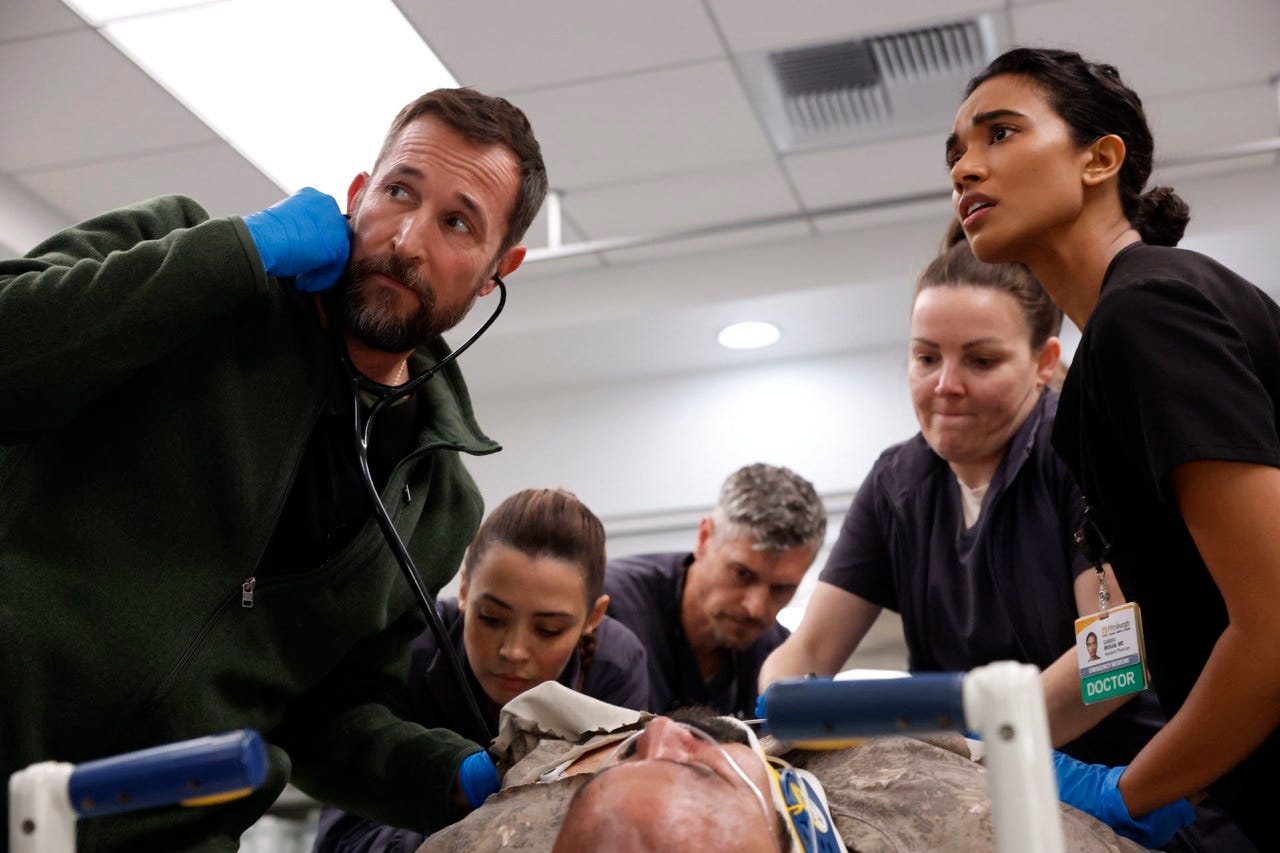
Even without the crises, the job itself is cognitively relentless. Teaching requires constant mental input in the form of cognitive switching, content recall, and decision-making. There have been studies suggesting teaching may involve more minute-to-minute decision-making than some high-intensity medical professions (I told you I watched The Pitt to decompress, right?).
The human nervous system is remarkably adaptable. It has to be. Teachers would not survive a school year otherwise. But adaptability has a cost.
The human brain and body are not especially good at distinguishing between physical emergencies and sustained psychological vigilance. If you spend ten months constantly alert, constantly switching tasks, constantly regulating emotion, constantly anticipating the next interruption or problem, eventually your body starts treating that state as normal.
And teaching is a profession built almost entirely around sustained activation.
A teacher can go from explaining chemical bonds, to de-escalating a student conflict, to answering emails from parents, to hallway duty, to an IEP meeting, to covering another class during planning, to trying to comfort a grieving student, to entering grades, to adapting tomorrow’s lesson because half the class was absent due to testing—all before lunch.
That kind of cognitive switching burns enormous amounts of mental energy. It’s expensive emotionally, too.
Teachers are constantly regulating themselves for the benefit of others. You cannot snap at students because you’re having a terrible day. You cannot spiral emotionally because the lesson still has to happen. You cannot disappear into grief, anger, anxiety, or exhaustion because thirty people are sitting in front of you waiting for stability.
Even if you have to perform that stability.
And over time, that sustained activation starts to accumulate in the background, like interest on a loan.
The structure of the school year doesn’t allow recovery. Schools are built around continuity, not processing. The next bell rings. The next class arrives. The next email comes in. The next mandate gets dropped into your inbox at 5:37 PM on a Thursday.
A student dies. Third period still starts at 12:10. Layoffs happen. Grades are still due Friday. You get devastating personal news. The lesson still has to happen.
The expectation is simple: show up tomorrow and do it again.
And for months, we do.
During most of the school year, urgency acts like a stimulant. There’s always another deadline, another lesson, another problem that has to be solved immediately. Even the normal chaos of a school day can be kind of addicting because everything is always changing and different. Momentum carries you much farther than you realize.
But by May, the horizon becomes visible. The emergency energy starts fading.
The exhaustion doesn’t.
When May arrives, the urgency begins to loosen its grip, and the body finally starts collecting debts it deferred all year long.
Also, by May, the exhaustion is no longer just mental. It settles into the body, too. Many of us know we’re going to get sick right after school ends. We’re sleeping (or wanting to sleep) more than we usually do. Headaches. Muscle fatigue. Brain fog.
That’s why, by May, teachers sit quietly in their classrooms during planning periods instead of socializing. It’s why answering one more email suddenly feels impossible. It’s why walking papers to the front office feels like a journey across Mordor. It’s why teachers stare at computer screens for thirty seconds before remembering what they opened the tab for.
It’s why small tasks suddenly develop enormous startup costs. May isn’t when teachers stop caring.
It’s when accumulated impact finally becomes visible.
Summer “Vacation”
At this point, we should probably address a misconception held by many outside of education:
Teachers are not paid for summer break.
We are paid for the ten months we work, and that salary has to be distributed across twelve months. In some districts or financial arrangements, that distribution happens automatically. In others, teachers have to budget for it themselves. We all know stories of first-year teachers who didn’t realize this and, in May, find themselves in an emergency job hunt.
For a vast number of teachers, summer often means second jobs like tutoring, curriculum writing, teaching summer school, any number of teaching-adjacent jobs in the community: day cares, church programs, or science camps; or just…jobs. It’s also time to catch up on medical appointments, rebuild courses, learn content for new courses, recover, and try to restore ourselves before August rolls around.
Vacations (if any) are often scheduled between those things. As the child of teachers, I remember family trips built around conferences and summer obligations. Later, my wife and I did the same thing with our son.
What many people interpret as ‘time off’ is often recovery time from a profession built around compressed, sustained output. By June, many teachers are not looking for luxury. They are looking for nervous-system recovery.
But there’s still a strange cultural pressure surrounding teachers’ summers. Teachers are expected to either justify the time or apologize for it. Nearly every teacher has heard some version of ‘must be nice’ in response to the idea of a “paid” summer break.
Or more corrosively, teachers are often reminded that ‘you knew what this job was when you signed up for it.’ And many of us did.
But the profession itself has changed underneath us. Salary schedules have been unilaterally changed (and not for the better, according to the pay scale in effect when I started. I should be making about $10K more than I am now under the “revised” scale). Responsibilities expanded. Staffing shrank. Planning time evaporated. Benefits changed. Expectations increased. The emotional demands of the job intensified while public trust in teachers eroded.
Which is part of why the conversation around teacher summers often feels so disconnected from the lived reality of the profession. Many teachers are not ending the year rested. They are arriving at the end of it depleted.
Summer is often less an escape from labor than a recovery from compressed labor.
For many teachers, the work does not end so much as change uniforms.
The Teacher in May…
So if a teacher you know seems quieter in May—slower to answer texts, staring off for a moment too long in the grocery store or halfway through a conversation, sitting silently in their classroom during planning instead of talking—understand that what you are probably seeing is not laziness, disengagement, or someone mentally halfway to a beach somewhere.
You are watching someone come down from a very long stretch of sustained vigilance.
You are watching the accumulated impact become visible.
And if you are a teacher reading this, feeling guilty because you can’t seem to move as fast, think as clearly, or initiate tasks the way you could back in October, understand that there’s nothing “wrong” with you.
You are tired in a way that only really makes sense once you understand what the job actually asks people to carry for ten straight months.
The strange thing about teaching is that the work is often invisible even as it happens. From the outside, people see summers, holidays, and pre-5:00 pm school dismissal times. They don’t see the cognitive switching, the emotional regulation, the constant vigilance, the accumulated grief, the decision fatigue, the Sundays, the weeknight grading and planning that follows teachers home at night, the recovery time, or the strange expectation that teachers absorb instability without ever letting students feel the full weight of it.
But teachers see it in one another immediately. We recognize our May versions: the slower walk down the hallway, the thousand-yard stare during meetings, and the sitting quietly at a desk before the first class starts. The look of people approaching the end of a very long burn.
And maybe that’s the simplest explanation for all of this: May isn’t when teachers stop caring.
It’s when the cost of caring finally becomes visible.
Oh, and one last thing—especially for newer teachers: hydrate, get good sleep, and try to take good care of yourself over the next few weeks. When the school year ends, that adrenaline & cortisol cocktail that’s been carrying you since August starts fading out, and for a lot of teachers, the immune system crash comes right behind it. There’s a reason so many of us get sick right after school lets out. I’ve already had mine.
Spot. On. And, very validating. I’ve been doing this for over 30 years (only 2 left!), and every year I beat myself up over not finishing the year with moments befitting the ending credits of Stand and Deliver or Dead Poets Society (cue credits and inspirational music). Instead I send a pic to my colleagues of a bullet riddled B-17 crash landing on its belly missing an engine. I’m always a bit sad and annoyed that I haven’t “figured it out” after all this time. Greatly appreciated.